20 Memory Games for Seniors That Actually Get Played (By Ability Level)
August 8, 2026 · 8 min read
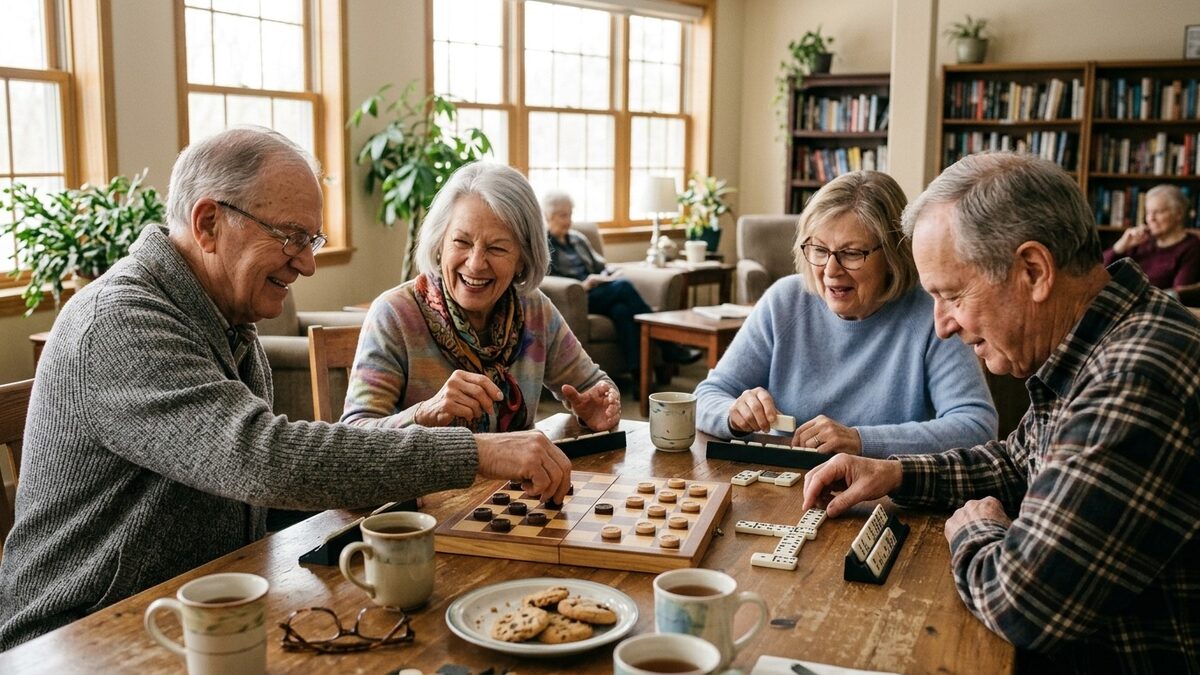
Memory games carry a special weight in senior living: they’re fun, but they’re also the activity families ask about most. The key to running them well is matching the game to the ability level in the room — a recall challenge that delights independent-living residents can discourage someone in memory care, while a fail-proof matching game can bore your sharpest bridge players.
Here are 20 memory games organized exactly that way, so you can pick the right one in seconds.
Level 1: Competitive memory games (independent & assisted living)
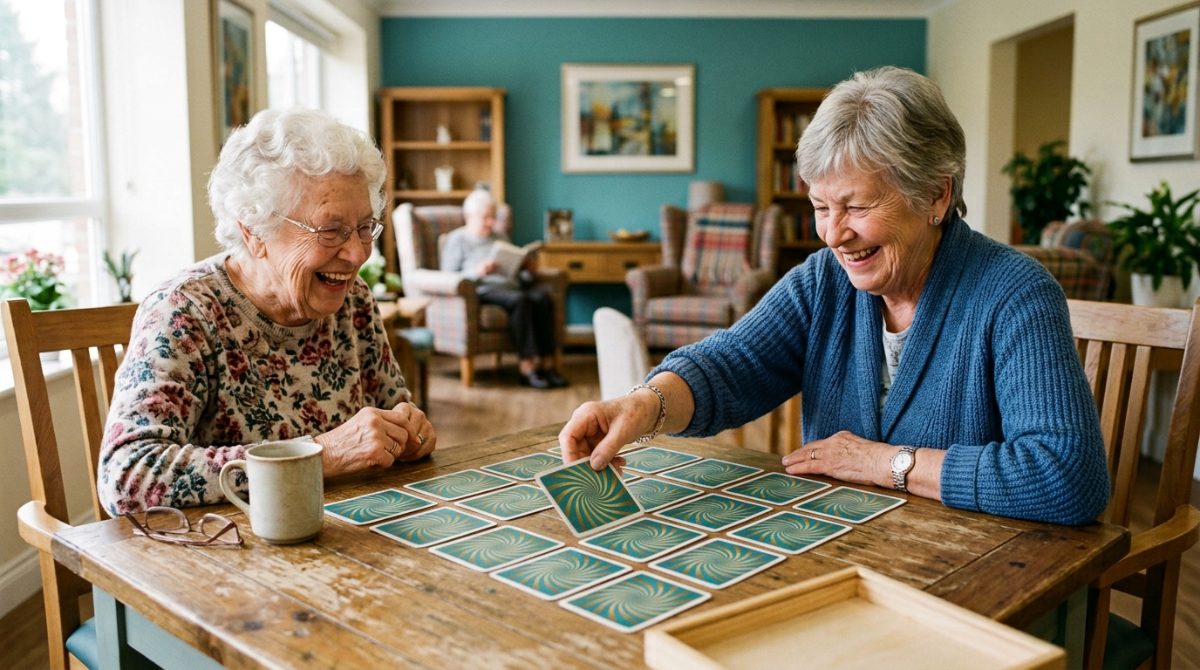
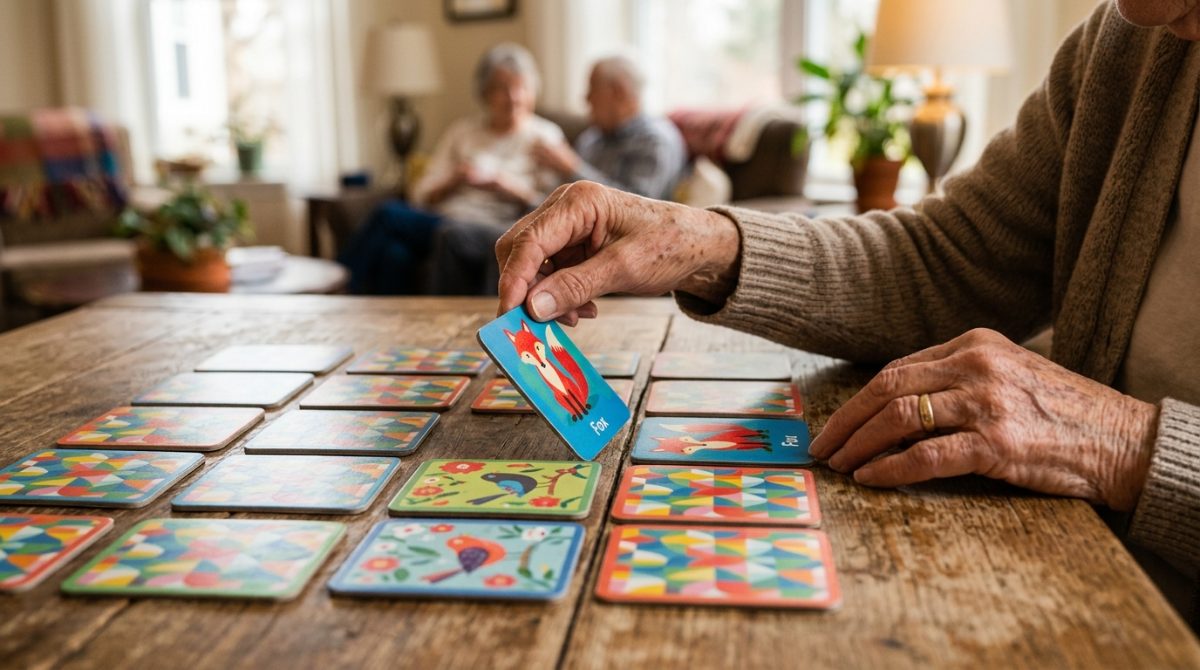
- Classic matching pairs — face-down cards, find the pairs. Use oversized cards and start with 12–16 pairs for a real challenge.
- Kim’s game (tray memory) — show a tray of 10–15 household objects for one minute, cover it, and have teams list what they saw.
- What changed? — same tray, but remove or move one item. Harder than it sounds, funnier than it should be.
- I’m going on a picnic — the alphabet chain game: each player repeats the list and adds an item. The room audibly roots for whoever’s on the letter Q.
- Name that tune (memory edition) — play 5 seconds of a classic song; name the artist AND where you first heard it.
- Story chain — one sentence per person, but you must recap the story so far first.
- Card sequence recall — deal 5 cards face up for 20 seconds, flip them, recall the order.
Level 2: Relaxed memory games (mixed groups)
- Face & name game — photos of old Hollywood stars; name the face. Long-term memory shines here.
- Finish the lyric — play or say the first line of a golden-oldie; the room finishes it. Technically a memory game, feels like a singalong.
- Photo reminiscence — vintage photos of kitchens, cars, storefronts; ask “what do you remember about these?” Every answer is right.
- Category recall — “Name 10 breeds of dog” as a group, whiteboard tally. Teams make it social, not stressful.
- Proverb pairs — match the first half of famous sayings to their endings; pairs nicely with our 101 trivia questions for seniors.
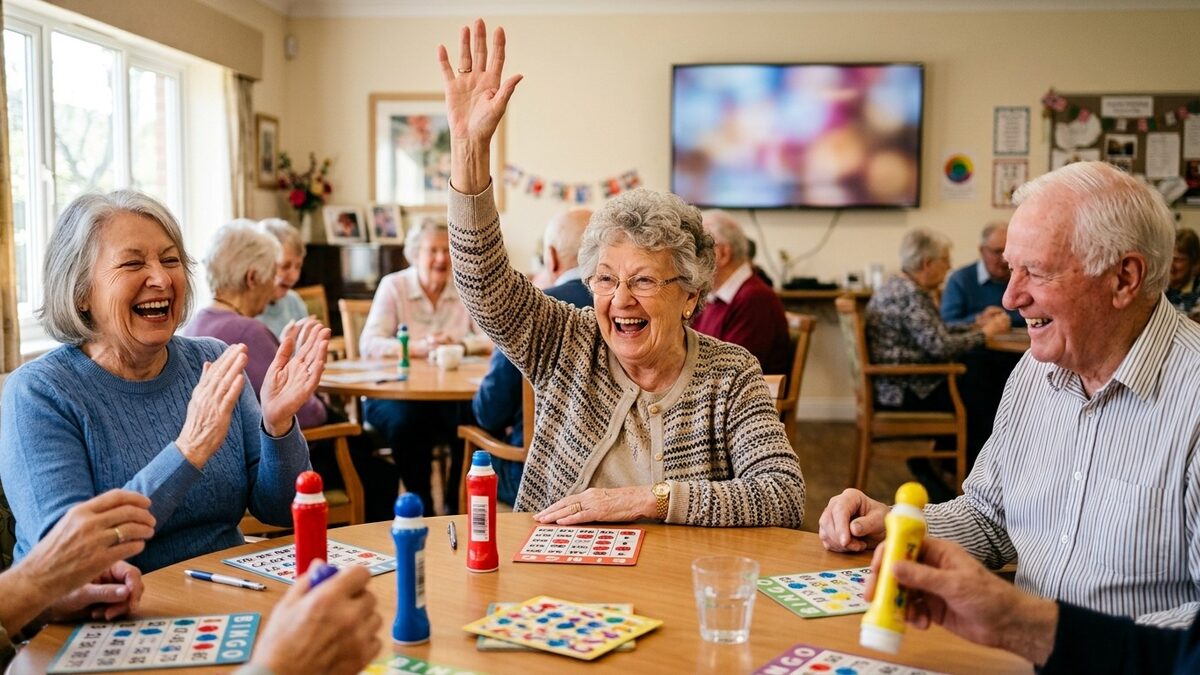
- Memory bingo — bingo cards with pictures of vintage objects; the caller describes the object without naming it.
Level 3: Memory-care games (fail-proof by design)
In memory care, the goal flips: the process is the win, and the game should be impossible to fail. These work beautifully alongside the ideas in our dementia activities guide.
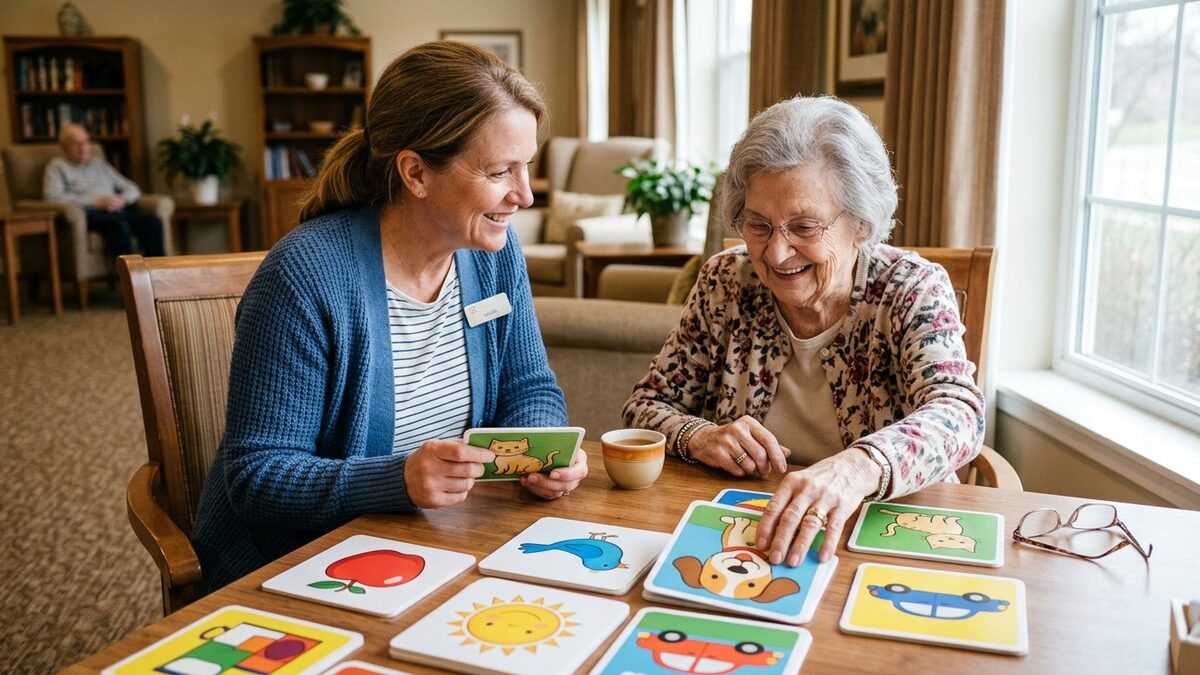
- Open-faced matching — all cards face UP; residents pair them at their own pace. Sorting is soothing and success is guaranteed.
- Sensory memory box — familiar objects (clothespin, whisk, spool of thread) to hold and talk about.
- Sing-along standards — melody memory outlives almost everything; “You Are My Sunshine” needs no instructions.
- Finish the phrase (spoken) — “An apple a day…” — instant wins, every time; more spoken formats live in our word games for seniors guide.
- Color and shape sorting — buttons, cards, or blocks; repetitive, calming, confidence-building.
- Hand-clap patterns — copy a simple rhythm; procedural memory stays strong late into dementia.
- Scent memories — coffee, cinnamon, lavender in jars; smell is the most direct road to memory we have.
How to run memory games without frustration
- Never put one resident on the spot. Direct questions to the room or to teams, and let answers come from anywhere.
- Play DOWN the stakes. “Let’s see what we remember together” lands better than “memory test.”
- Use oversized, high-contrast materials — jumbo cards, big photos, bold prints.
- Watch for fatigue. Fifteen focused minutes beats forty-five draining ones.
- Mix ability levels with team play — pair a sharp resident with one who needs support; both leave feeling good.
Do memory games really help?
They’re not a cure, but the evidence is encouraging: regular cognitive stimulation is associated with better day-to-day function and mood, and the social side of group games may matter as much as the puzzle itself. The practical takeaway for a programming calendar: schedule short memory-game sessions several times a week rather than one long weekly session, and rotate formats so the novelty itself exercises the brain — memory is just one of the five “muscle groups” in our brain exercises for seniors program. Pair them with physical movement — our chair exercises routine — for the strongest overall program.
Run memory games on your activity-room TV
ActivityBuilder’s built-in Memory Match game puts oversized matching pairs on the big screen — residents play together, take turns from their seats, and nobody squints at small cards. It sits alongside 32 other games for seniors, all schedulable in the drag-and-drop activity calendar. Start a free trial and run a memory-game session this week.
Frequently Asked Questions
What are the best memory games for seniors?+
Matching pairs with oversized cards, tray-memory games like Kim’s game, name-that-tune, and finish-the-phrase are reliable favorites. The best choice depends on ability level — competitive recall games for independent residents, fail-proof matching and sensory games for memory care.
What memory games are good for seniors with dementia?+
Choose fail-proof formats: open-faced matching, sorting by color or shape, finish-the-phrase, sing-alongs, and scent or object reminiscence boxes. The process is the goal — keep sessions short, never test, and celebrate every response.
Do memory games improve memory in seniors?+
Regular cognitive stimulation is associated with better daily function and mood in older adults, and group games add social engagement that research links to brain health. Short, frequent, varied sessions work better than occasional long ones.
How do you play memory games with a large group of seniors?+
Use team formats: tray-memory contests between tables, category recall on a whiteboard, memory bingo, and finish-the-lyric rounds all scale past 20 players. Direct questions to teams rather than individuals so nobody is put on the spot.
Stop planning from scratch
ActivityBuilder gives you 580+ ready-to-use activities, 30+ in-browser games, and a drag-and-drop calendar builder — everything in this article, done for you.
Start your 7-day free trial →